
Read Time: 2-3 Minutes
When you’re trying to hit your protein goals during a busy day, it can be easy to reach for prepackaged protein shakes or scoop protein powder into your daily smoothie. You hit your macros on paper, but there’s a problem.
Hitting your protein number is just half of the equation. Most protein powders and shakes leave out valuable micronutrients your body needs.
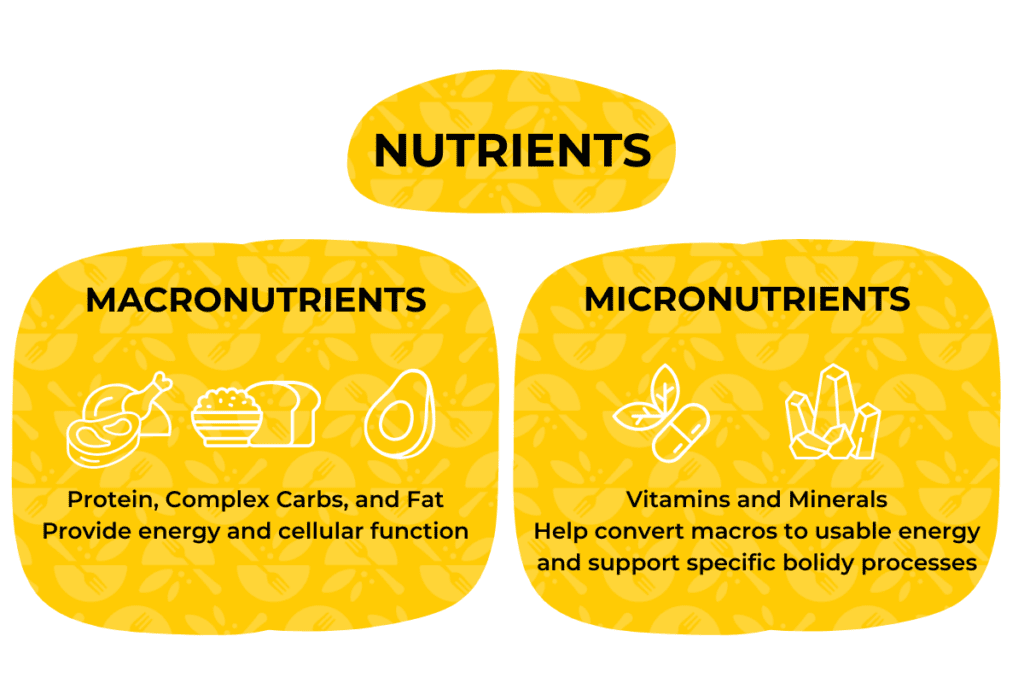
The Difference Between Macro- and Micro-Nutrients:
Macronutrients are protein, carbohydrates, and fats – the foundational nutrients your body needs in large quantities to produce continued energy and keep your body structurally supported.
You can learn more details about what role each macronutrient serves by reading this quick blog post.
Micronutrients are the roughly 30 vitamins and minerals you need to actually use those macros effectively. They support specific bodily processes, like your metabolism, immune system, sleep, and more. You need less of each vitamin and mineral than you do of each macronutrient, but that doesn’t mean they’re optional.
The Problem with Protein Powder and Shakes:
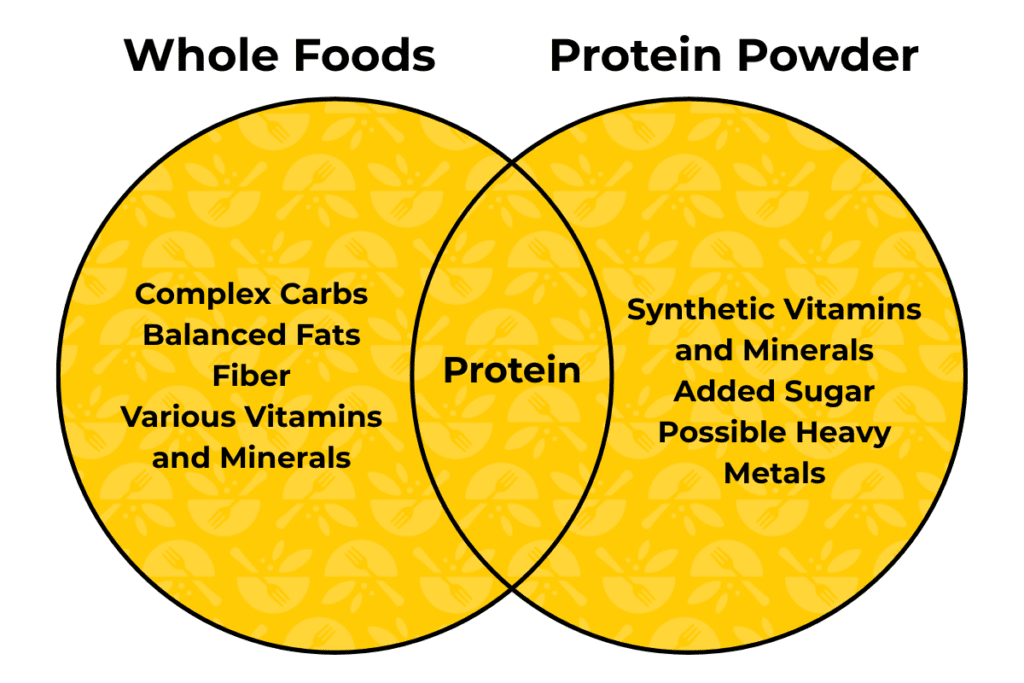
Protein powders and shakes are highly processed, which means all micronutrients that naturally exist have been stripped out. To compensate, manufacturers add things back in – sometimes synthetic minerals, often artificial sugars, and in some cases, heavy metals that accumulate in your body over time.
There’s also a digestion problem. Because the micronutrients that support your metabolism and digestion are missing, your body has a harder time breaking down and absorbing the protein itself. You might be getting 30 grams of protein on paper, but your body is actually using far less.
What Your Body Actually Needs:
Our bodies need well balanced meals. That means not just focusing on high protein, but also getting enough fiber, balanced fats, complex carbs, and micronutrients to work alongside protein. They all help each other do their jobs more effectively.
You can’t get that from a powder. It comes from eating whole foods.
Look at this simple comparison:
A typical protein shake – ~30 grams of protein, some added sugar, and a synthetic mineral or two.
A Konala protein bowl – 46 grams of whole food protein, plus a base and toppings that provide fiber, complex carbs, balanced fat, and a wide variety of naturally occurring vitamins and minerals.
That’s not marketing, it’s just whole foods doing what processed foods can’t.
The Konala Difference
Protein powders have their place and are great for supplementation, but they shouldn’t be the foundation of how you fuel your body.
At Konala, high-protein is the starting point, not the whole story. Every bowl is built around nutrient-dense, whole ingredients that your body can actually digest and use, so you feel better, sustain energy longer, and support your health over time.
It’s not complicated. Real food works better.
To hear more about why balanced meals matter, watch Konala founder Trace Miller explain it here.
For more content on protein, and healthy eating and living, follow us on socials: